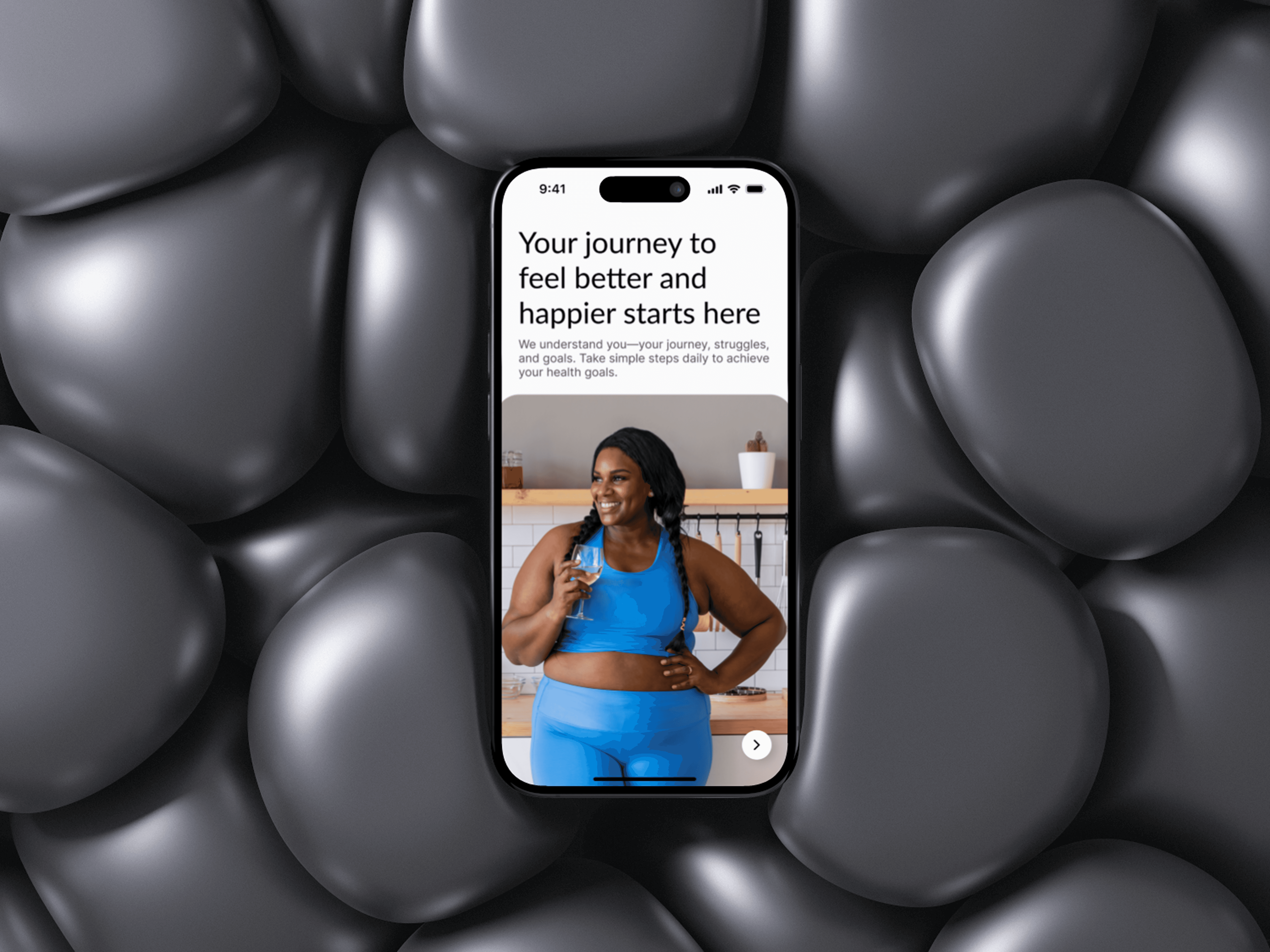
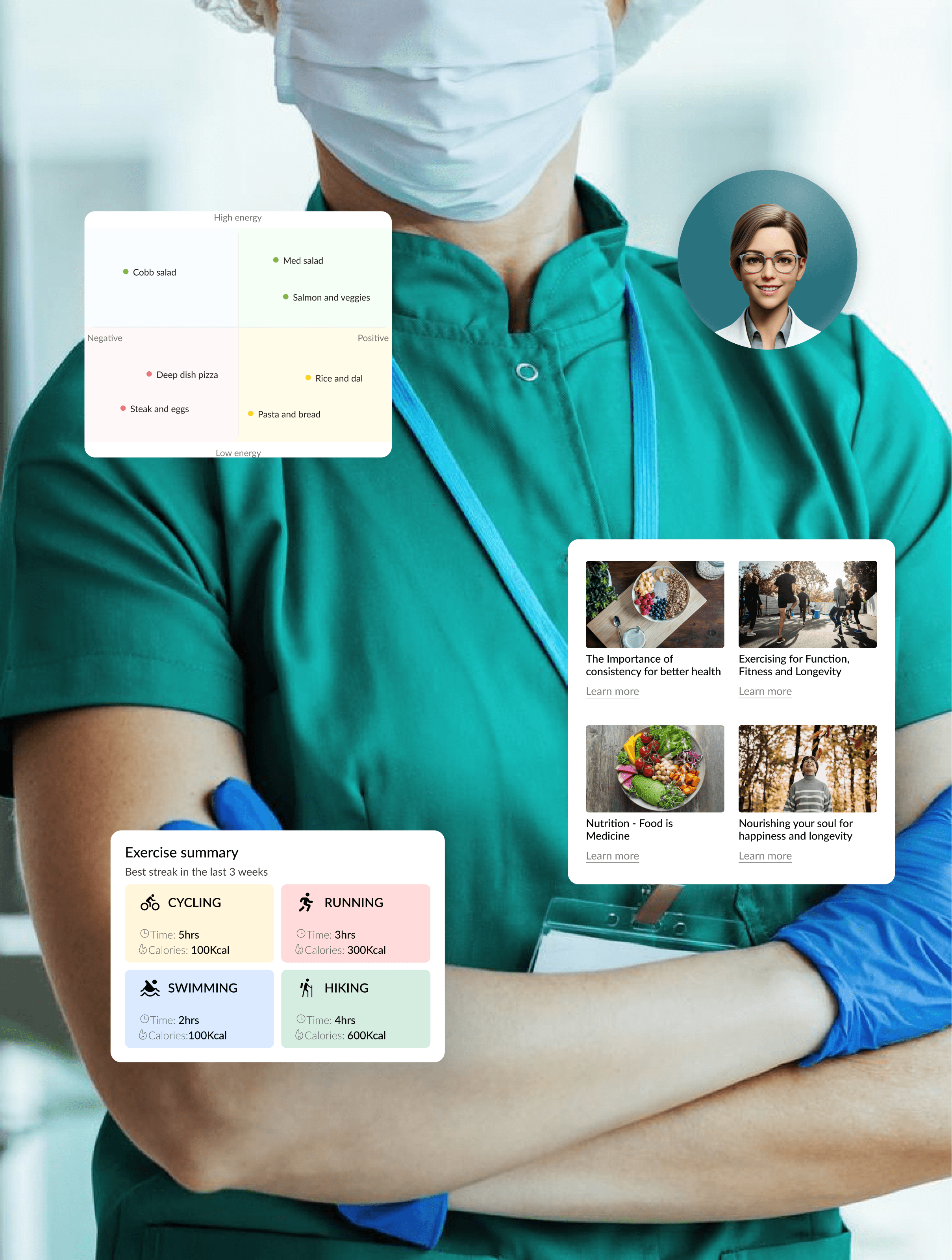
A US-based AI-powered health app helping adults manage chronic conditions through personalized, adaptive daily programs — and the features I designed to bring that experience to life.
Overview
AIHS is a direct-to-consumer health app built for adults in the US living with or at risk of chronic conditions — primarily diabetes and metabolic health issues. The app runs users through a structured 30-day program, broken into four adaptive weekly plans. Each week's plan is generated by an AI that evaluates the user's actual progress from the previous week — not a fixed template, but a living program that adjusts to where the person actually is.
Why managing chronic health is so hard
Chronic disease management is one of the most abandoned categories in digital health. The reasons are consistent across research: apps overwhelm users with data, generic plans feel irrelevant within days, and logging becomes a chore before it becomes a habit. For adults aged 35–65 managing conditions like Type 2 diabetes or obesity, the friction isn't information — they often know what to do. The friction is sustained behavior change in the middle of real life.
Who we were designing for
The primary users are US-based adults between 35 and 65, many managing Type 2 diabetes, pre-diabetes, or obesity-related conditions. They are not fitness enthusiasts — they are people for whom health management is a new or reluctant priority, often motivated by a diagnosis or a doctor's recommendation. Many are navigating this for the first time.
My contribution
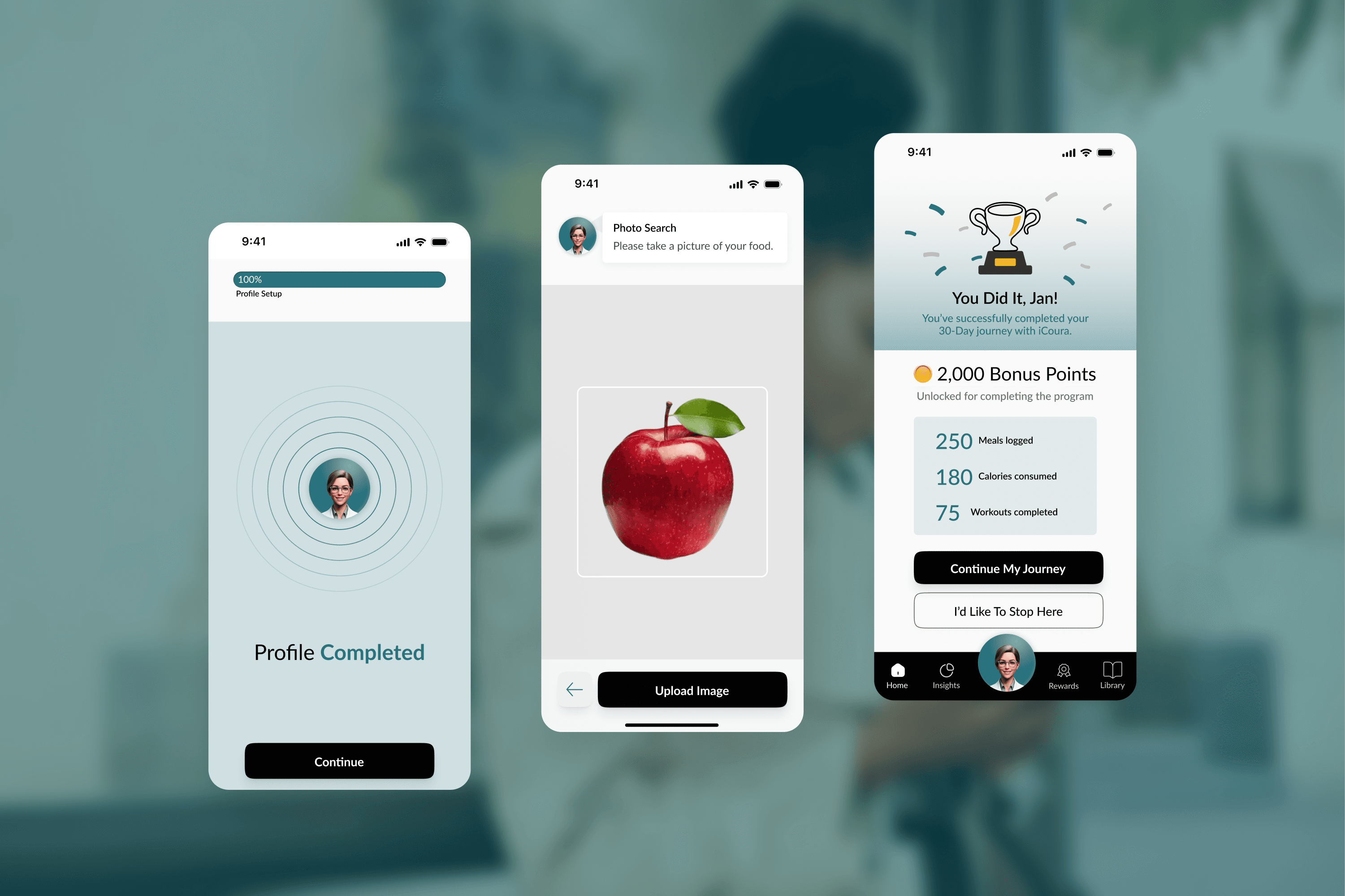
The core MVP — onboarding, profile setup, and program architecture — had already been designed when I joined. I was handed the existing Figma files and tasked with extending the product: designing the features users interact with every single day of the 30-day program.
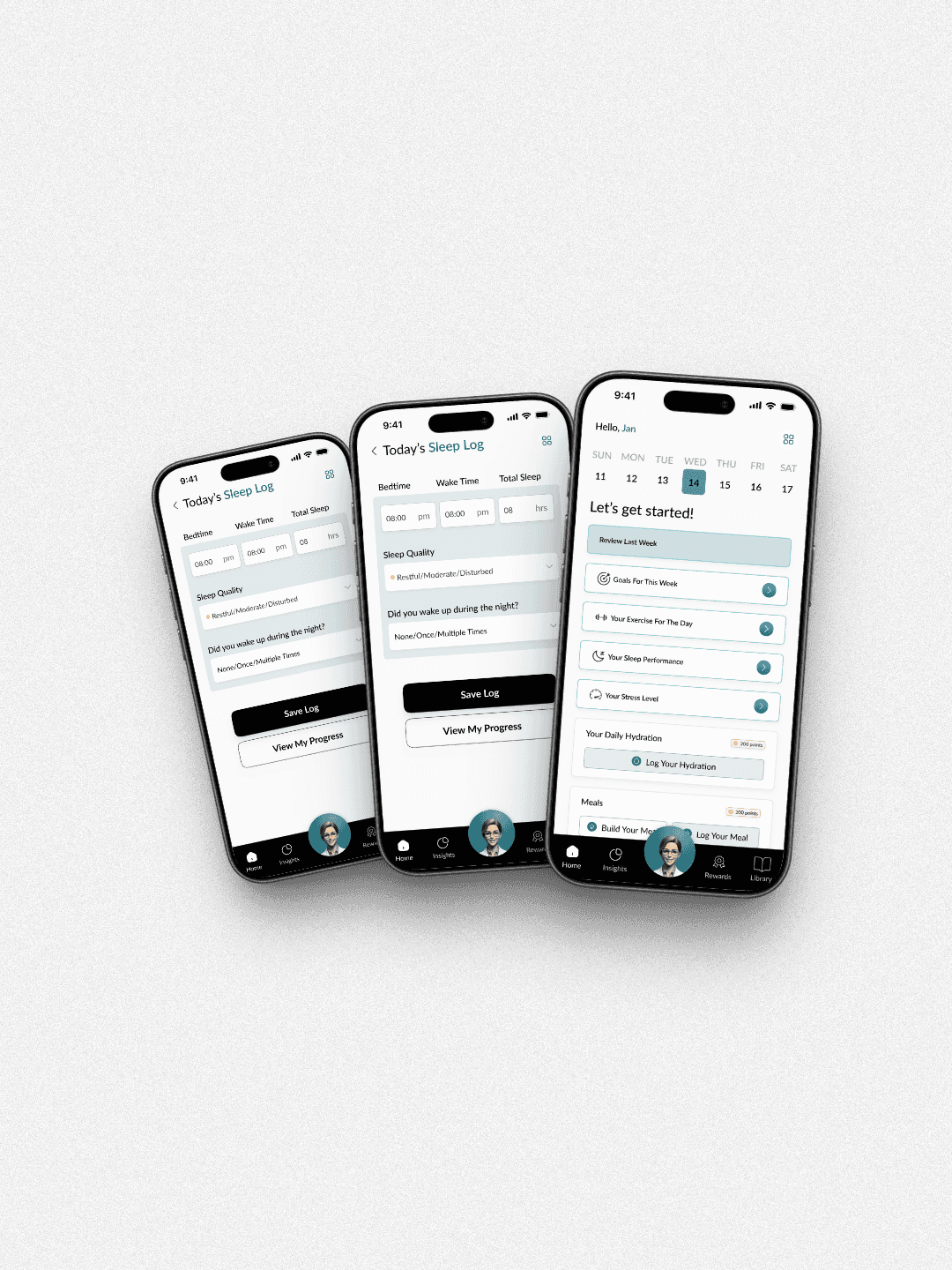
Understanding the program structure was essential to designing screens that fit naturally within it. Each week the AI recalibrates based on the previous week's logged data — the screens I designed are the daily interface through which this cycle happens.
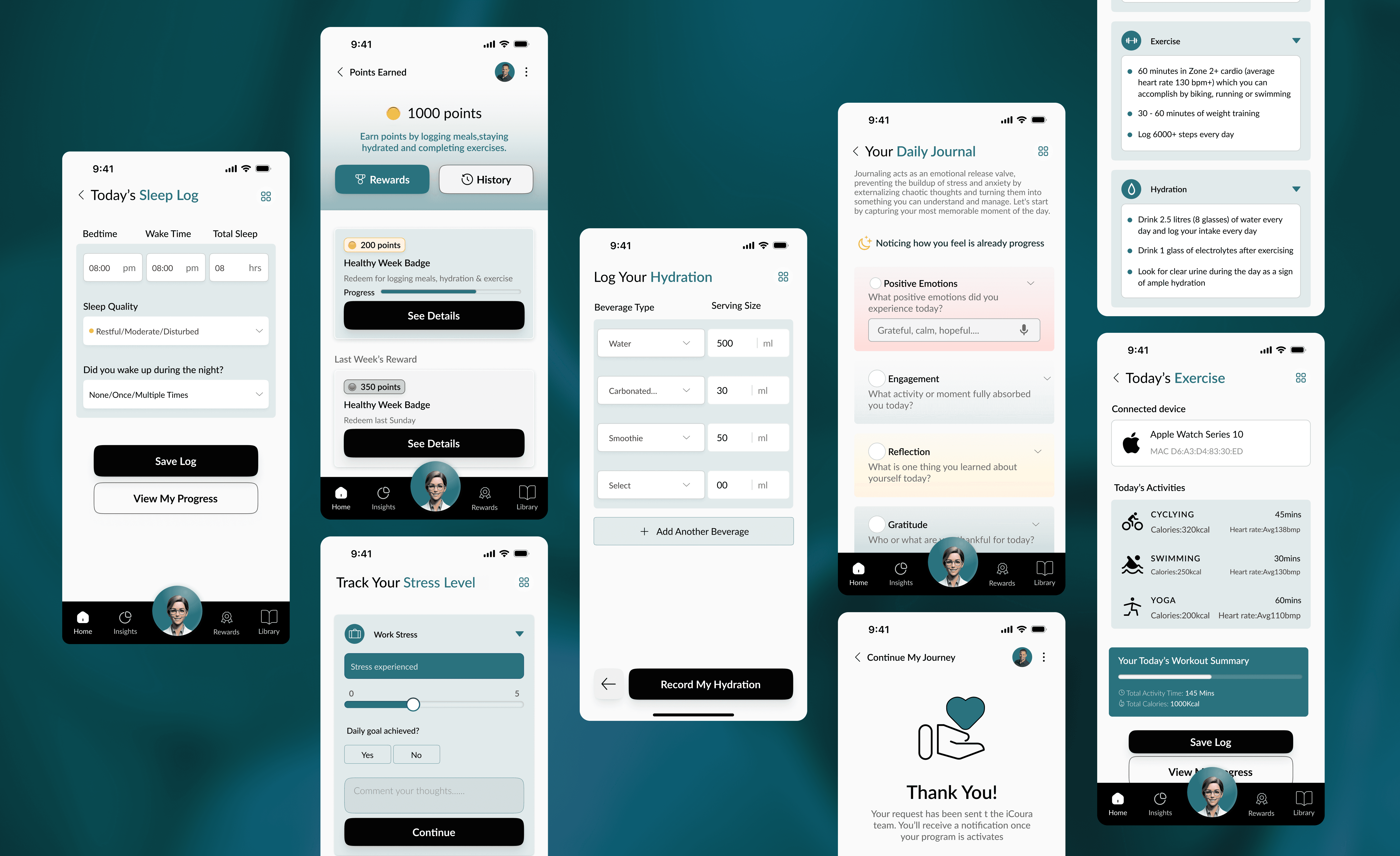
The features I designed
Each screen was designed to serve a specific moment in the user's day — from the first open in the morning to the end-of-day wrap.
Reflection
Designing for daily behavior is a different discipline to designing for first impressions. You're not trying to delight — you're trying to get out of the way. The screens that work hardest are often the ones users notice least.
Working within an existing design system taught me to read before I wrote — to understand the visual logic already in place and extend it faithfully. It also showed me how much the product brief matters to design decisions: knowing this was for adults managing real chronic conditions, not fitness enthusiasts, changed every tone and hierarchy choice I made.